News

Force Majeure Middle East

""
Bynder Desktop Image for mobile

The escalating conflict in the Middle East has roiled global transportation and trade routes.

What we are seeing

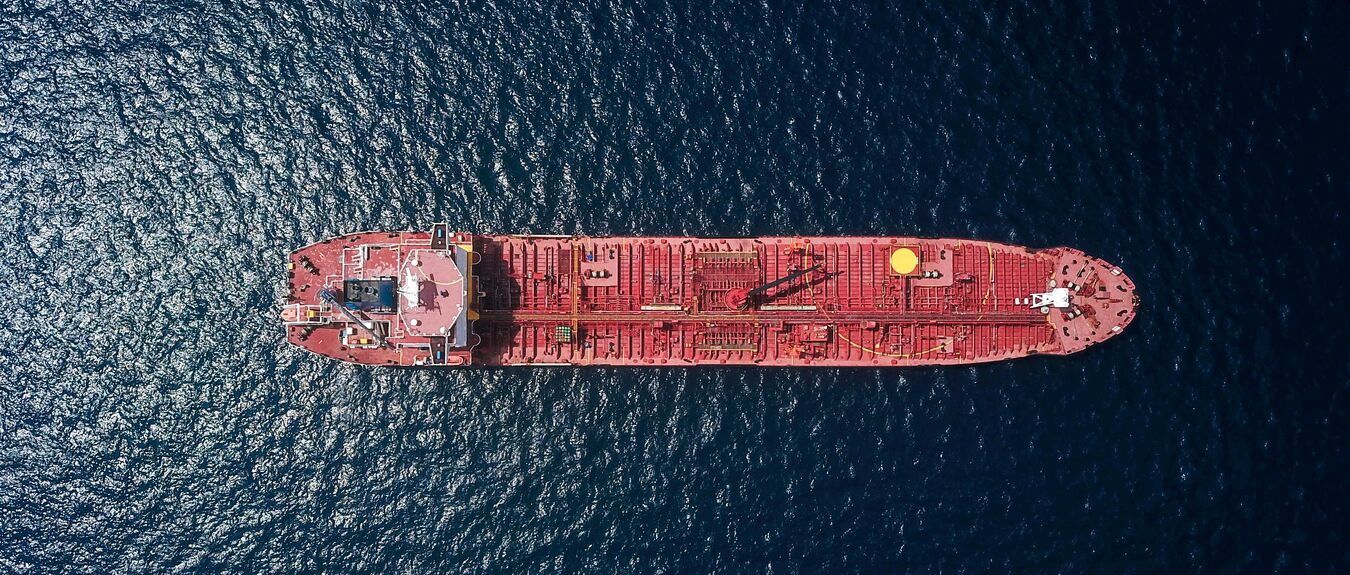
  • Ocean carrier suspensions and rerouting. Multiple major ocean carriers have suspended or shifted vessel services in the Red Sea and Gulf Region amid heightened security concerns. Shipping through the Strait of Hormuz, a critical maritime chokepoint, is effectively suspended, following incidents involving commercial vessels. 
  • Air routes affected. Restrictions impacting airspace are already altering global trade patterns, particularly for cargo moving through or transiting the Middle East. 
  • Security measures and surcharges. Carriers have implemented enhanced security protocols, including directing vessels to designated safe areas. At least one major ocean carrier has announced emergency conflict. 
  • Heightened geopolitical and trade uncertainty. Public disagreements among U.S. and European governments regarding military operations and base access have created the risk of retaliatory trade measures. 
  • Operations on the ground are navigating the impact. Some operations, for example state energy companies in the Middle East, have already declared force majeure as a result of the conflict. Other companies are continuing to operate as far as possible, while managing disruption to supply chains, logistics and staffing, and assessing whether official “guidance” from authorities are sufficient to amount to an instruction or legal impediment capable of supporting a force majeure claim.

What companies can do

1. Check your contracts' governing law 

  • For contracts governed by U.S. or English law, the actual words used in the contract are what ultimately matter. Courts permit extra-contractual excuses, such as impossibility and frustration, only in extreme cases. 
  • While the words of the contract are also important in GCC jurisdictions, some regimes contain statutory rules that may apply in addition to, or regardless of, the drafting of the force majeure clause. For example, under onshore UAE, Saudi and Qatari law, exceptional public events may in some cases allow a court to reduce an obligation that has become excessively onerous, while supervening impossibility may extinguish the relevant obligation and bring the contract to an end; and under DIFC law, non-performance (other than a mere obligation to pay) may be excused where it is caused by an impediment beyond the party's control that it could not reasonably have foreseen, avoided or overcome, subject to notice requirements. 

2. Find the force majeure clause 

  • It could be buried somewhere unexpected or refer to “adjustments”, “variations”, “extensions of time”, “exceptions”, “unforeseen events” or “acts of God”, rather than force majeure. 

3. Establish which events are covered 

  • Examine how force majeure events are defined and decide whether the relevant event fits. Does the force majeure clause include armed conflict, or hostilities in addition to acts of war? 
  • There must be a close link between the force majeure event and the inability to perform. An impediment to the ability to perform is typically not sufficient. 
  • If the event is not mentioned, the clause could still be triggered where the force majeure clause broadly defines events as exceptional, beyond one party's control, unavoidable and not attributable to the other party (but check carefully that these conditions are fulfilled). 

4. Know how your clause links the event and non-performance

  • A force majeure clause usually requires performance of contractual obligations to be “prevented”, “impeded”, “hindered” or “delayed”. “Prevent” typically requires that the obstacle to perform is insurmountable, for example that it is no longer physically possible or legally permissible to perform the contract. “Impede”, “hinder” and “delay” can be construed more broadly and do not require the affected party to prove impossibility to perform. 
  • To rely on the clause, the event must be the only one affecting contractual performance (unless clearly stated otherwise). In other words, “but for” the event, a party must have been willing and able to perform. 
  • Some GCC legal regimes also distinguish between impossibility and exceptional hardship. Under onshore UAE, Saudi and Qatari law, supervening impossibility may extinguish the obligation, whereas exceptional circumstances making performance merely oppressive may instead justify the court's adjustment to the obligation.

5. Understand the effects of notifying an event 

  • Depending on how long performance is affected, the contract may allow the right to suspend, seek an extension of time or for either party to terminate. Are you prepared for one or more of these consequences? Could you leave or renegotiate a difficult commercial situation?
  • Is your dispute resolution mechanism sufficiently? Could gaps lead to ancillary claims, for example over the law governing an arbitration? How would you enforce orders or awards? 

6. Comply strictly with contractual notice requirements 

  • Ask yourself:
    • Is an initial notice of the force majeure event needed? 
    • Must you give details and evidence of the event and its effects?
    • By when and in what form should notices (initial and subsequent) and supporting documents be served? 
  • Pinpointing when the event started to affect your contract might not be easy. If unsure, notify force majeure at the earliest opportunity, then issue periodic updates regarding the continuing disruption so your claim is not time-barred. 

7. Document evidence supporting your claim  

  • Record and store evidence of all communications with your counterparties about the disruption and its effects, including order or service cancellations. 
  • You will generally have a duty to mitigate, so document reasonable steps taken to do so. 

8. Respond quickly to force majeure notices 

  • Failure to respond to a notice on time may constitute acceptance of the counterparty's claim. 
  • Review subcontracts and supply contracts in case you need to claim force majeure. 

9. Pursue commercial solutions in parallel with legal analysis 

  • Temporary delivery extensions, revised routing assumptions, volume flexibility, or negotiated cost sharing may be more effective—and less disruptive— than formal invocation of contractual remedies. 

10. Prepare for the event ending 

  • Agree with your counterparty a date when obligations will resume after the event and its effects have ended, especially if the contract is unclear. 
  • Time and resources will be needed to resume operations or clear backlogs, and you won't want to be in breach once the force majeure event is over. Although you might explore (or have a contractual right to request) a further extension of time, you are more likely to get relief during a post-event ramp-up if you inform your counterparty that the event is over but the preventing effects are still being felt.
Download a PDF version

View more insights and analysis

Register now to receive personalized content and more!