Insights and Analysis
AI-washing – when AI hype becomes a litigation risk


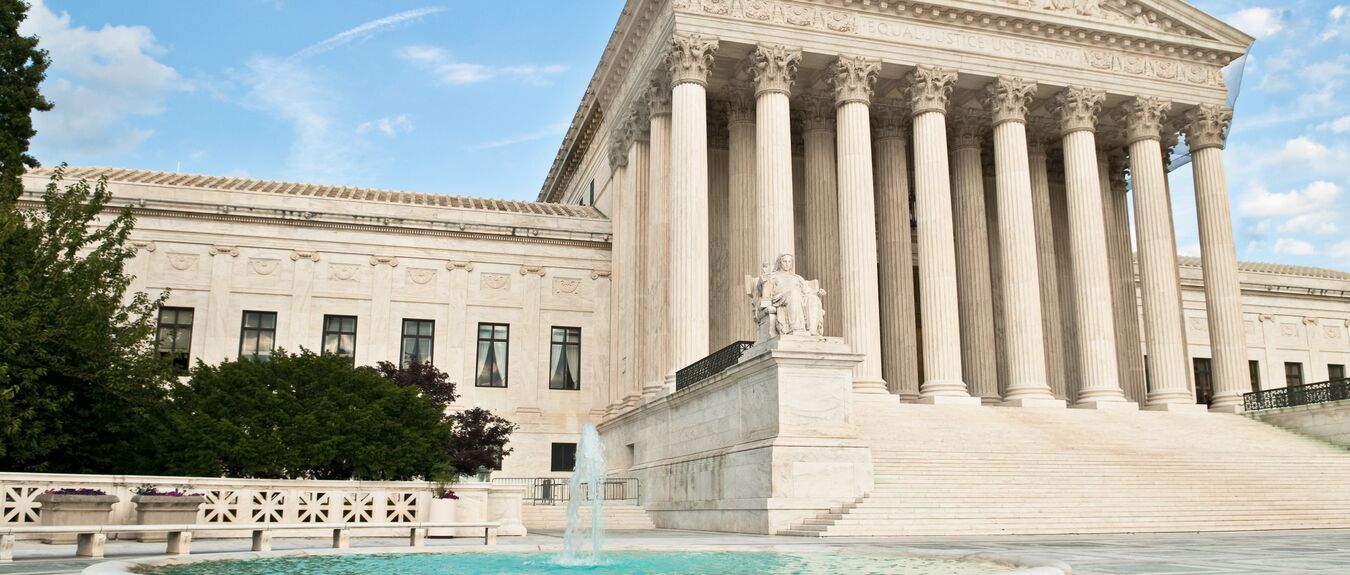
On April 29, the U.S. Supreme Court held oral arguments in the Hikma v. Amarin “skinny labeling” case, which considers the pleading standard for claims of “active inducement” of patent infringement when a generic drug is marketed with labeling that “carves out” one or more uses for which the reference product is labeled. Hikma and the U.S. argued that inducement requires clear, affirmative acts that necessarily encourage infringement and that compliance with FDA-approved labeling and ordinary, accurate statements about a generic product cannot suffice. Amarin countered that inducement is inherently context-dependent and that, among other things, Hikma's repeated investor and website statements plausibly encouraged physicians to prescribe the generic for Amarin's patented cardiovascular indication, making dismissal at the pleading stage inappropriate. The Justices appeared reluctant to announce new patent or Hatch–Waxman doctrine, focusing instead on the line between intent and conduct, and on the application of the pleading standard and existing inducement principles to the specific facts alleged in this case.
The Court is expected to issue its opinion on the case in late June or early July.
In November 2020, Amarin sued Hikma, alleging language used in Hikma’s FDA-approved label, investor statements, and promotional materials suggested that Hikma’s generic drug product icosapent ethyl could be prescribed for all of the uses of Amarin’s Vascepa, including the indication of reducing cardiovascular risk that had been “carved out” of the Hikma labeling for patent reasons. Hikma’s generic was FDA-approved only for severe hypertriglyceridemia.
Hikma denied the allegations, and motioned to dismiss the case, which was initially denied by a Delaware Magistrate Judge, before a district court in 2022 granted Hikma’s motion to dismiss. Then, in 2025, the U.S. Court of Appeals for the Federal Circuit revived the case, ruling that a generic manufacturer using a "skinny label" can be liable for inducing patent infringement. The Federal Circuit acknowledged Amarin’s arguments that the labeling of Hikma’s product was insufficiently skinny, and that residual information in the labeling could be read as teaching the patented use. However, the court was clear that labeling alone, in this case, would not be sufficient to state a claim, and focused on the totality of Hikma’s conduct.
In January 2026, the U.S. Supreme Court agreed to hear Hikma Pharmaceuticals v. Amarin Pharma, and we previewed the arguments at the time online here. This case comes before the U.S. Supreme Court on the motion to dismiss, and the core question is what conduct suffices to plead “active inducement” when a product is lawfully sold for non-infringing uses, but is foreseeably used by third parties (e.g., physicians) in infringing ways. The Court is not deciding whether Hikma actually induced infringement, which is an issue for trial. Instead, its ruling will determine only whether the case can move forward.
Under the Hatch-Waxman Act, a generic drug manufacturer may obtain FDA approval by carving out patented uses from its labeling, which generally must otherwise be the same as the labeling of the reference product, in a practice known as “skinny labeling.” Arguing before the Supreme Court, Amarin asserted that Hikma crossed the line into unlawful behavior by affirmatively encouraging infringing use, and argued that the case is a fact-bound application of pleading standards rather than a request for new doctrine.
In response, Hikma argued that selling a dual-use product is lawful absent a clear, affirmative act that promotes infringement – and that Hikma did not engage in such activity. Hikma further asserted that Hatch–Waxman is specifically designed to prevent one patented use from blocking generic competition for another lawful use. We identified the following arguments as notable during the Supreme Court hearing:
The Court’s opinion on these oral arguments will not be issued until late June or early July. In our article predicting the “areas to watch for pharmaceutical and biotechnology innovation and competition” in 2026, we explained how the outcome of this case will likely clarify the conditions under which generic manufacturers may be held liable for induced infringement. Based on the arguments, it is possible that the Court could clarify conditions under which the FDA-approved skinny labeling itself, without additional conduct, could provide sufficient grounds to state a claim of induced infringement.
We will continue to keep you informed about developments in this case, and on FDA carve-out issues more generally. If you have any questions regarding how this litigation may impact your products, feel free to contact any of the authors of this alert or the Hogan Lovells attorney with whom you regularly work.
Authored by Gary Veron, Komal Nigam, Jason Conaty, and Bryan Walsh